The smell of ruptured chlorophyll and damp earth fills the cool morning air. A heavy, rhythmic hum echoes down your street as someone tackles their weekend chores before the sun climbs too high. Dew still clings heavily to the fescue, flashing like tiny glass beads in the early light.
It feels like a highly productive start to a Saturday, beating the mid-July heat before the humidity settles in. But beneath the metal deck of that machine, a silent, destructive friction is tearing away at hardened steel.
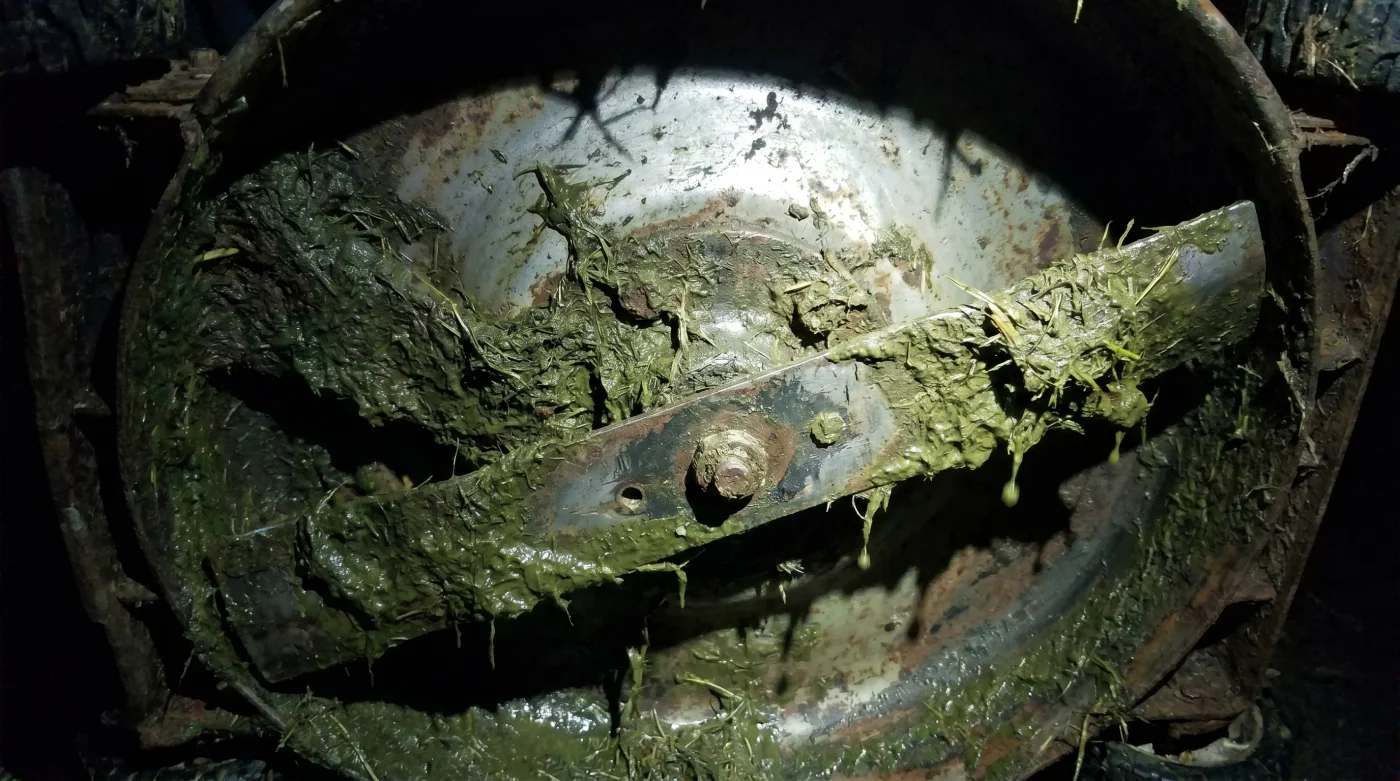
The sound of the engine shifts. It drops from a steady, high-pitched whir to a struggling, guttural thud as clumps of green plaster themselves against the exhaust chute. You are no longer slicing cleanly through foliage; you are tearing it, ripping the roots, and suffocating the engine.
Professional groundskeepers hear this sound and wince. They know that rushing out to cut damp foliage isn’t a badge of honour; guarantees premature equipment failure.
The Grinding Paste Phenomenon
We tend to view water as a lubricant. When washing dishes or scrubbing a floor, moisture helps things glide. But in the aggressive, high-speed vortex under a rotary deck, water behaves entirely differently.
Grass leaves hold microscopic silica crystals, dust, and soil particles. When introduced to moisture, these elements bind together, creating a highly abrasive grinding slurry.
Every time the metal edge strikes a wet clump, it isn’t just forcing its way through plant matter. It is passing through a gritty, sticky paste. This slurry clings to the edge, dragging against the bevel at thousands of revolutions per minute.
The physical toll is immediate. What should be a razor-sharp edge becomes blunt, rounded, and severely pitted after a single morning of damp cutting.
The perspective shift here is simple but profound: patience is a mechanical advantage. By waiting for the moisture to completely evaporate, you remove the abrasive binding agent entirely. Cutting only when the lawn is bone dry triples the lifespan of your edge.
- Sump pump failures trace back to overlooked discharge pipe angles
- Cedar lumber prices drop when you buy off-season fence panels
- Cast iron skillet rust vanishes with this basic pantry acid
- Eavestrough downspouts freeze solid without a simple thermal break modification
- Peat moss production halts as garden centres pivot to alternatives
Suddenly, waiting until the late afternoon isn’t laziness or procrastination. It becomes a deliberate act of preservation.
Meet Marcus, a 54-year-old municipal groundskeeper in Kelowna. He manages dozens of hectares of rolling parkland. If you walk past his maintenance shed at 7:00 AM, the machines are completely silent. He spends his mornings pruning, raking, or greasing spindles. He refuses to drop a deck until the mid-morning sun has baked the dew off the ryegrass. “Cutting wet is just feeding sandpaper to the machine,” he says, running a calloused thumb over an edge he hasn’t needed to sharpen in three months. “When the grass is crisp as a dry towel, the steel barely works.”
Timing the Cut: Regional Rhythms
Applying this patience requires adjusting your routine to match your specific Canadian climate. Nature dictates the daily schedule, and you simply respond.
For the Early Riser
You prefer to get your chores done before the neighbourhood wakes up. The thought of sweating through a 30-degree Celsius afternoon is entirely unappealing.
Shift your routine to the twilight hours. By early evening, the sun has baked away the morning dew, but the air has comfortably cooled.
For the Coastal Dweller
If you live near Halifax or Vancouver, the heavy morning fog can cling to the soil long after the sun comes up. The air feels heavy, and the ground stays soft.
Rely on tactile feedback rather than the clock. Brush the palm of your hand across the turf; if your bare skin feels damp, the machine stays parked.
For the Weekend Warrior
A heavy rainstorm rolls through on Friday night. Saturday is your only day to catch up on yard work before a busy week begins.
This is where discipline matters most. Let the lawn dry until Sunday afternoon, even if throws off your weekend plans. The cost of replacing chewed-up belts, seized pulleys, and dull metal far outweighs the mild annoyance of a delayed chore.
Mindful Application
Protecting your equipment requires minimal effort, but it demands consistent awareness. Treat the process like preparing a delicate meal; conditions must be right before you begin.
Approach the task with a minimalist mindset. You do not need expensive sprays or specialized treatments, just careful observation and strict timing.
- Walk the perimeter of your yard and check the most shaded areas under large trees. If the shade is damp, wait.
- Wipe your boots on the turf. If clippings stick to the leather, the moisture content is too high.
- Listen to the engine pitch. If it drops suddenly or sounds like it is bogged down in mud, stop immediately and raise the deck.
- After a dry cut, use a stiff bristle brush to sweep away the powdery dust from the undercarriage.
Pay attention to the physical cues your yard gives you. The grass will tell you when it is ready to be cut.
Tactical Toolkit:
Optimal cutting temperature: 20 to 25 degrees Celsius, late afternoon.
Wait time after a heavy rain: Minimum 24 hours of direct sunlight.
Inspection tool: A simple paper towel pressed into the turf. If it picks up water, walk away.
The Quiet Rhythm of Waiting
Mastering this small detail shifts how you interact with your property. You stop fighting the elements and start working within natural environmental boundaries.
There is a deep, quiet satisfaction in pulling a machine out of the shed and hearing it run perfectly. The cut is clean, the engine breathes easily, and the edge stays true month after month.
You are no longer forcing a chore upon the land. You are maintaining your space with intention, patience, and quiet respect for the tools you rely on.
“Cutting wet is just feeding sandpaper to the machine. When the grass is crisp as a dry towel, the steel barely works.” – Marcus, Groundskeeper
| Key Point | Detail | Added Value for the Reader |
|---|---|---|
| Wet Grass | Acts as an abrasive grinding paste against metal. | Prevents premature wear and costly equipment replacements. |
| Bone-Dry Grass | Shears cleanly with minimal friction. | Triples the lifespan of the edge, saving time on sharpening. |
| Evening Mowing | Allows the lawn to bake dry while the air cools down. | Maximizes personal comfort while protecting the machine. |
Frequently Asked Questions
Is a little morning dew really that bad for the metal?
Yes. Even slight moisture is enough to bind dirt and silica into the abrasive paste that rounds off your edge.What if I absolutely have to cut the lawn while it is wet?
Raise your deck height to the maximum setting to reduce engine strain, and clean the undercarriage immediately afterward with a stiff bristle brush.How can I tell if the soil is dry enough?
Walk across the most shaded part of your property. If clippings stick to your shoes, the moisture content is still too high to cut safely.Does this apply to electric battery-powered models as well?
Absolutely. While electric motors do not stall quite like gas engines, the severe friction from damp clumps will drain your battery in half the normal time.How often should I check the edge if I only cut dry foliage?
When strictly following these dry-cutting principles, a visual inspection twice a season is plenty. The steel will maintain a crisp bevel for months.