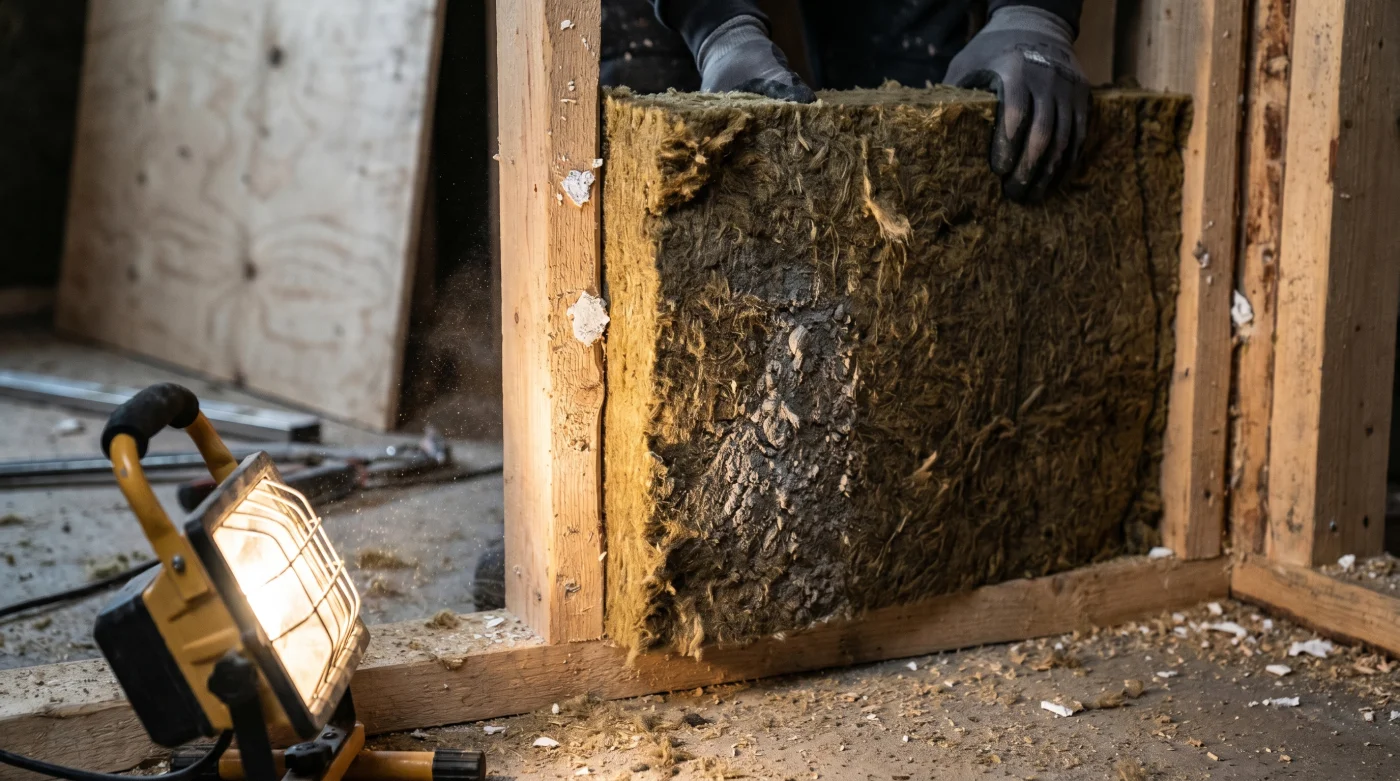
Stepping into an unfinished stud frame on a Tuesday morning in November, the chill is immediate. Frost clings to the edges of the 6-mil poly film, and the air smells of raw spruce and cold earth. Usually, this is the moment the drywall crew is waiting for, leaning against their trucks while the pink, spun-glass batts are rapidly unrolled and stuffed into the wall cavities.
But right now, across distribution hubs from Halifax to Vancouver, those familiar pink bundles are sitting on backorder. Massive supply chain disruptions have quietly halted the flow of traditional fiberglass, leaving countless winter builds exposed to the dropping temperatures. The comfortable rhythm of residential construction has slammed into a logistical wall.
The scramble to maintain schedules has sparked a quiet revolution on the ground. Contractors are aggressively pivoting to something heavier, darker, and altogether different. They are turning to dense rock-based thermal materials—not as a desperate compromise, but as a sudden awakening to a superior method of trapping heat against the harsh Canadian winter.
The Density Paradox
For decades, you likely viewed insulation as a fluffy afterthought. The pink stuff was just something you shoved behind the drywall to keep the heating bill down. It felt like stuffing a winter jacket with cotton candy—light, airy, and easily compressed. If you squeezed it too hard, it lost its thermal value, making the installation a delicate balancing act.
When you pick up a batt of mineral wool, the illusion breaks. It does not flop or tear; it holds its shape like a dense loaf of sourdough. By spinning molten basalt rock and steel slag into fibers at extreme temperatures, manufacturers create a slab that resists fire, rejects water, and swallows sound. The current logistics crisis didn’t just force a product substitution; it forced an upgrade in how we conceptualize the very skin of our homes.
Meet Elias Thorne, a 48-year-old framing contractor in Kelowna. He hit this reality head-on last month. Facing a six-week delay on an entire pallet of R-20 fiberglass for a lakeside build, he reluctantly ordered mineral wool to keep his crew working. “The first day, the guys were complaining about the weight,” he notes, brushing rock dust off his worn canvas work pants. “By day three, after seeing how it friction-fits into the bays without sagging or needing staples, nobody wanted to go back to the pink stuff.” Elias realized that the supply chain’s failure was actually a massive favour to the home’s final thermal performance.
- Pantry shelving depth creates dead zones where dry goods expire
- Sump pump failures occur because homeowners ignore the check valve
- Cast iron radiators require a specific boiled linseed oil treatment
- Major Canadian garden centres are permanently phasing out peat moss.
- Popular floor epoxy resin kits trigger severe Canadian health agency warnings.
Fitting the Stone to the Space
Not every room requires the exact same approach to this heavy-duty material. Because rock wool behaves differently than spun glass, you cannot simply cram it into corners and hope for the best. Adapting your specific strategy depends entirely on the cavity you are trying to fill and the atmospheric threats of that specific zone.
For the Basement Renovator: Cold concrete walls are notorious for trapping moisture behind framing. Fiberglass acts like a sponge in these damp environments, wicking condensation until it sags heavily to the floor plate. Mineral wool is inherently hydrophobic. If moisture breaches your vapour barrier during a spring thaw, water simply beads and drains through the stone fibers, preventing the mold bloom that typically ruins subterranean drywall.
For the Home Office Soundproofer: Working from a spare bedroom has exposed the acoustic flaws of modern, open-concept homes. Because dense rock-based thermal materials carry significantly more mass than fiberglass, they aggressively disrupt the transfer of soundwaves. Packing interior shared walls with this dense material effectively turns a noisy, echoing hallway into a muffled, distant whisper.
For the Attic Maximizer: Heat naturally rises, and the roof deck takes the brutal brunt of our January extremes. Layering rigid mineral wool boards directly over the ceiling joists, rather than just stuffing the bays between them, creates an unbroken thermal break. It physically stops the heat from bleeding out through the wooden framing itself, keeping the living space below highly regulated and sharply reducing your winter utility bills.
Cutting Stone with Bread Knives
Working with rock wool is a tactile experience that demands an entirely different rhythm. You cannot tear it with your hands, and squeezing it forcefully into a tight space will only bow your drywall outward. You must approach the installation with deliberate, measured cuts.
Unlike fiberglass, which requires staples or strapping to fight gravity over time, friction is your primary fastener. When cut slightly wider than the stud bay, the dense batt grabs the rough spruce fibers and holds itself indefinitely in place. Mastering this application requires a few specific adjustments to your workflow:
- Measure the cavity width and add exactly half an inch to your cut for the perfect friction fit.
- Ditch the utility knife; use a long, serrated bread knife to slice through the dense fibers smoothly without tearing them.
- Press the batt evenly into the cavity, ensuring the face is perfectly flush with the wood framing to prevent drywall bulging.
- Carve shallow channels into the back of the batt to accommodate electrical wires, rather than compressing the whole piece behind the cable.
The Tactical Toolkit: Equip yourself with a long serrated insulation knife, a high-quality N95 respirator (the rock dust is heavy but can be irritating in enclosed spaces), a heavy-duty measuring tape, and a long metal straight edge. Target an R-value of R-22 for standard 2×6 exterior walls to handle those bitter nights when the mercury dips past -24 Celsius.
Building for Permanence
The sudden absence of a highly familiar product feels disruptive on the job site, but it often serves as a necessary catalyst for better practices. We often build through habit, relying blindly on the materials that are cheapest and most abundant, until the logistics chain unexpectedly snaps and forces us to look closer at the physical mechanics of our homes.
Packing your walls with spun stone isn’t just a hasty reaction to a shipping delay; it is a deeply conscious decision to build for permanence. It brings a profound, quiet peace of mind knowing the barrier between your living room and a screaming winter storm is impervious to rot, resistant to fire, and capable of holding the quiet warmth of your home for decades to come.
“True structural integrity begins when we stop treating insulation as a filler, and start treating it as a functional, protective masonry layer within our walls.”
| Key Point | Detail | Added Value for the Reader |
|---|---|---|
| Moisture Resistance | Mineral wool is inherently hydrophobic, whereas standard fiberglass absorbs water. | Prevents mold growth in basements and areas prone to condensation, protecting your family’s air quality. |
| Acoustic Density | Spun stone carries immense mass, blocking soundwave transfer between rooms. | Creates dead-quiet home offices and bedrooms, isolating noise from high-traffic living areas. |
| Installation Stability | Dense batts are friction-fit, maintaining their shape without staples or strapping. | Eliminates the cold spots caused by sagging insulation over decades of gravity, lowering your heating bills permanently. |
Frequent Insulation Concerns
Is mineral wool safe to handle without protective gear?
While it lacks the sharp glass splinters of traditional pink batts, it still creates heavy dust. You should always wear long sleeves, gloves, and an N95 mask during installation.Will it fit in standard Canadian 16-inch framing?
Yes. It is manufactured to fit precisely into standard 16-inch or 24-inch on-center stud bays, designed to friction-fit perfectly.Does it cost more than traditional fiberglass?
Historically, it carries a 15-20% premium. However, the superior thermal retention and lack of sagging often offset the initial cost through long-term energy savings.Can I mix mineral wool with existing fiberglass?
Absolutely. You can use mineral wool for bottom basement plates or sound-critical interior walls while leaving existing fiberglass intact in unaffected zones.Is it truly fireproof?
Because it is made from spun volcanic rock and slag, it is non-combustible and can resist temperatures over 1,000 Celsius, actively slowing the spread of house fires.