You open the pantry door, and the faint, dusty scent of ancient paprika meets the chilled evening air. The overhead light casts long shadows across twenty-four inches of solid oak shelving, illuminating the familiar front row of cereal boxes, glass pasta jars, and recent grocery runs. Behind that neat facade lies a shadowed expanse of forgotten purchases. You reach past a fresh bag of coffee beans, fingers grazing something crinkled and soft in the dark. It is a quiet, creeping frustration you face every time you prepare to cook, knowing that the physical depth of the closet is swallowing your groceries whole.
We are taught that sprawling storage is the pinnacle of a well-appointed kitchen. You look at glossy interior layouts that boast massive, walk-in closets with floor-to-ceiling wooden ledges, imagining a life of perfect domestic order. Yet, when Thursday evening rolls around and you are hunting for arborio rice to make a simple risotto, that cavernous space functions against your best intentions. The sheer depth practically begs you to shove yesterday’s half-empty lentil bag behind today’s bulk purchases, creating an archaeological dig of dry goods where the oldest items are systematically buried alive.
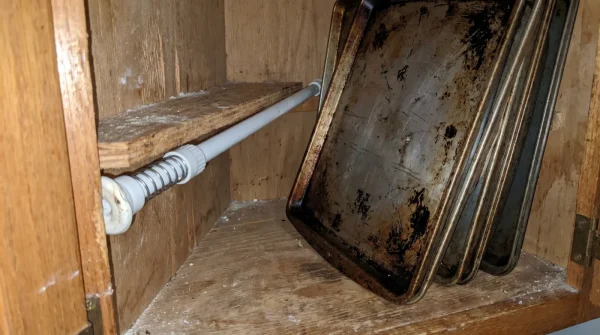
The reality of standard domestic architecture is that traditional shelf depth was originally designed to accommodate bulky appliances like slow cookers, heavy stand mixers, and oversized roasting pans. A twenty-four-inch wooden ledge is not a practical storage solution for perishable dry goods; it is an unsupervised waiting room for expiration dates. When you cannot see what you own without moving three distinct stacks of canned tomatoes, your kitchen is quietly bleeding your hard-earned grocery budget straight into the green bin. Every forgotten bag of walnuts and every stale box of crackers represents a fundamental failure of spatial design.
The Geometry of Waste
Think of your home kitchen like an active river system. Ingredients should flow in from the local market, pause briefly in your cupboards, and flow seamlessly out onto your dinner plates. A deep wooden shelf acts like a heavy dam in that river. It creates stagnant pools where older inventory sits untouched, slowly degrading in quality and flavour. You stack new items in front because it feels intuitive, but you are inadvertently building walls that hide food.
To stop this wasteful cycle, you have to completely rethink the physical boundaries of your storage environment. The root issue is not your personal organizational skills, nor is it a lack of discipline after a tiring grocery run; it is the geometry of the shelf itself. When you physically eliminate the dark corners, you eliminate the waste. The goal shifts from trying to mentally remember what you tucked behind the oatmeal, to designing a rigid physical space that does all the remembering for you.
Clara Hughes, a 42-year-old private chef working out of tightly packed Toronto condos, solved this systemic problem purely by accident. After repeatedly billing her clients for duplicate spices because she could not find the originals hidden in deep, cavernous cupboards, she tore out the heavy wooden ledges in her own home. She replaced them with a series of shallow, industrial metal track trays. By restricting the usable depth to just eight inches, she forced a visual-first layout. Her household food waste dropped to zero within a single month.
Structuring for Your Cooking Rhythm
Every household consumes dry goods at a wildly different pace. Adopting a shallow-tray system requires tailoring the metal tracks to fit how your family actually prepares meals, rather than how a lifestyle catalogue tells you to store things. The beauty of a track-based system is its modularity; you can adjust the physical constraints to match your grocery habits.
- Sump pump failures occur because homeowners ignore the check valve
- Cast iron radiators require a specific boiled linseed oil treatment
- Major Canadian garden centres are permanently phasing out peat moss.
- Popular floor epoxy resin kits trigger severe Canadian health agency warnings.
- GFCI outlets trip constantly unless homeowners identify this specific wire reversal.
For the bulk buyer, purchasing flour, rice, and sugar in heavy ten-kilogram sacks makes shallow tracks seem counterintuitive at first glance. The tactical workaround is to keep exactly one sturdy, deep shelf at the very bottom of the pantry, resting just inches above the floorboards. Decant exactly what you need for two weeks into narrow, clear containers on the upper shallow metal trays. This hybrid approach keeps the massive bags out of your daily sightline, while maintaining total inventory awareness up top.
For the weekend prep cook, whose Sundays are spent roasting almonds and simmering broths for the busy week ahead, the pantry requires rapid, frictionless accessibility. In this scenario, install your shallow metal track trays at eye level, but angle them slightly downward. This gravity-fed approach mimics a commercial retail display, ensuring that a fresh jar seamlessly slides forward the moment you remove the front container, preventing anything from lingering unnoticed.
For households managing chaotic snackers, dealing with half-eaten chip bags and crushed cereal boxes is a daily battle. Instead of letting children stack boxes haphazardly onto deep wooden shelves, use compartmentalized shallow tracks with thin wire dividers. You simply slot them vertically like files inside a filing cabinet. This layout entirely prevents the classic crushed-box scenario and instantly alerts you the moment the preferred snacks are running genuinely low.
Installing the Visual-First System
Transitioning from heavy wooden depths to a tactile, metal-tracked system takes little more than a focused Saturday afternoon. You are actively trading static, heavy construction for a dynamic, responsive method of inventory management. Begin by clearing out your current space completely, wiping down the bare walls, and applying a quick dab of filler to patch any holes left by the old, bulky wooden brackets.
The actual installation relies on a simple slotted wall track framework that anchors directly into the structural framing of your home. Using a reliable stud finder, locate the wooden supports behind the drywall to ensure the system can hold the weight of dense canned goods. This modular setup allows you to adjust the vertical spacing between your metal trays down to the exact millimetre.
Implementing the track system requires a specific, mindful sequence of actions to ensure stability and alignment:
- Secure heavy-duty metal wall standards to the studs using two-and-a-half-inch wood screws.
- Snap shallow metal trays—strictly no deeper than eight to ten inches—into the vertical brackets.
- Space the trays based on the exact height of your preferred containers, leaving barely an inch of clearance above the tallest lid.
- Group foods by culinary category, always placing items with the nearest expiration date on the left side to establish a natural reading pattern.
To execute this spatial shift properly, your tactical toolkit should include a reliable stud finder, a lightweight cordless drill, and a magnetic torpedo level. Source powder-coated steel track trays that feature a small, raised front lip to prevent glass jars from accidentally slipping off the edge. Maintaining an ambient pantry temperature of 15 to 20 degrees Celsius will ensure your newly visible dry goods stay fresh.
Reclaiming the Kitchen Economy
Watching a bag of expensive almond flour slowly expire because it was pushed into the dusty shadows is a small, quiet defeat. It is a systemic failure of the kitchen environment, rather than a personal failure of the cook. By physically swapping deep, dark wood for shallow, bright metal, you alter the entire relationship you have with your ingredients. You move from a state of constant, mild anxiety about what might be going bad in the dark, to a state of total, relaxed clarity.
A pantry layout that forces a visual-first approach fundamentally respects your time, your energy, and your grocery budget. Every single time you open that door, the ingredients present themselves clearly and honestly without requiring you to dig. You naturally cook with what you have because you instantly recognize exactly what is available. It turns a frustrating daily chore into a calm, predictable interaction, grounding your home in a simple, highly functional peace.
The moment you stop digging for ingredients is the moment you actually start cooking; a pantry should present your food, not conceal it.
| Key Point | Detail | Added Value for the Reader |
|---|---|---|
| Deep Wooden Shelves | 24-inch ledges that encourage front-to-back stacking of dry goods. | Highlights the root cause of hidden inventory and expired food waste. |
| Shallow Metal Trays | 8-inch depth restriction forcing a single-file, horizontal alignment. | Eliminates blind spots, ensuring you only buy what you genuinely need. |
| Track-Based Modularity | Adjustable vertical slotted brackets mounted directly to wall studs. | Allows rapid reconfiguration as your family’s grocery habits shift over time. |
Pantry Modification FAQ
Do I need a contractor to install metal track shelving?
Not at all. If you can handle a cordless drill and a stud finder, you can complete this installation in a single afternoon. The slotted tracks simply screw directly into your existing wall studs.
Will shallow trays reduce my overall storage capacity?
While you lose physical volume, you gain usable inventory space. Deep shelves are mostly filled with dead air and expired goods; shallow trays ensure every square inch holds active, edible food.
What is the ideal depth for a pantry shelf?
Aim for eight to ten inches. This depth accommodates standard cereal boxes and large pasta jars comfortably, without providing enough room for a second row of hidden items to form behind them.
How do I handle bulk purchases with a shallow layout?
Retain one deep, heavy-duty shelf at floor level for oversized sacks of rice or flour. Decant your bi-weekly portions into smaller containers to display on the shallow metal trays above.
Can I use glass jars on metal track trays?
Absolutely. Just ensure you select powder-coated metal trays that feature a raised front lip. This acts as a subtle barrier, preventing smooth glass containers from sliding off the edge.