You roll your truck onto the gravel lot, the tires crunching heavily against the packed earth. The air out here, several miles past the city limits, smells sharply of crushed cedar needles, damp soil, and the metallic hum of a large bandsaw blade biting through timber. It feels entirely disconnected from the sterilized home improvement centres you usually frequent, where the smell of lumber is masked by the scent of floor wax and shrink-wrap.
Just yesterday, you were staring at a neatly stacked pile of smooth cedar boards under the fluorescent glare of retail aisles. The price tag on a single dressed two-by-four was enough to make your stomach drop, forcing you to reconsider the entire scale of your backyard project. You likely assumed that high-grade cedar had simply become a luxury material, out of reach for a standard budget.
That massive premium, however, is not for the wood itself. It is for the aesthetic processing, the trucking to a centralized warehouse, the marketing overhead, and the pristine, splinter-free finish that appeals to weekend hobbyists. Big box stores thrive on the assumption that you do not have the tools or the patience to handle wood in its rawest form.
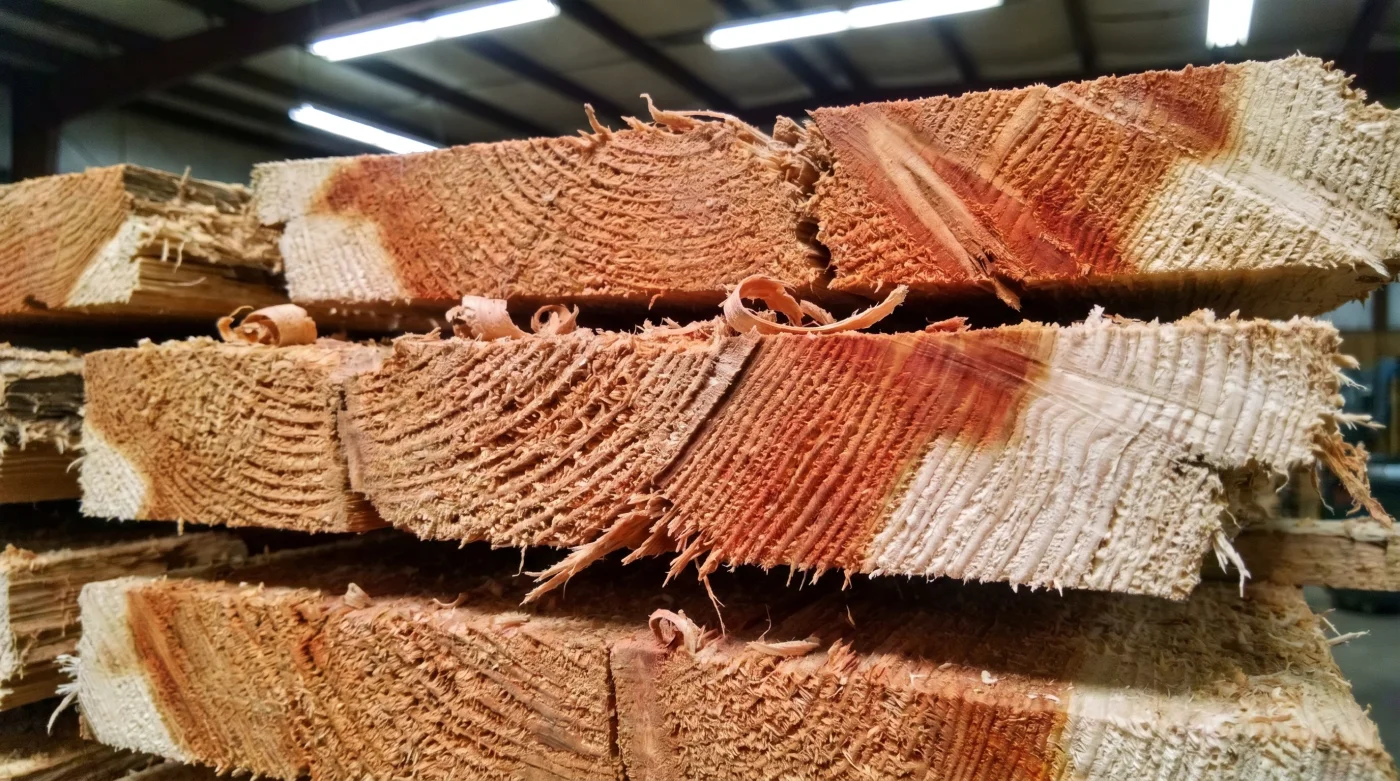
When you step out of your vehicle and walk toward the stacking yard of a local sawmill, you realize the arbitrage hiding in plain sight. Rough-sawn structural boards, stacked tightly under long tin roofs, are selling for literally half the price of their retail counterparts. You are looking at the exact same tree, just intercepted a few steps earlier in the supply chain.
The Illusion of the Smooth Board
Think of retail lumber like a pre-chopped, vacuum-sealed bag of vegetables. You are paying a steep tax for the convenience of someone else doing the prep work. Corporate hardware stores specialize in what is known as ‘dressed’ wood, meaning it has been run through commercial planers to ensure absolute uniformity across thousands of stores.
What they do not openly advertise is that you are actually paying for the missing sawdust. A standard retail two-by-four is not two inches by four inches; it has been mechanically shaved down to one-and-a-half by three-and-a-half inches. At the rural mill, a rough-sawn two-by-four is a true, full-dimension piece of timber, retaining all its original mass.
This rough, fuzzy texture is often perceived as a flaw by amateur builders, something to be strictly avoided. Yet, if you are building an exterior structure like a pergola, a fence, or a deck sub-structure, that slightly splintered surface is not a defect. It is a highly functional advantage that most buyers overlook entirely.
A textured, unplaned cedar board holds oil and pigment far better than a glassy-smooth surface. The rough surface drinks the stain, pulling the protective finish deep into the cellular fibres rather than letting it sit precariously on top, waiting to peel after a harsh Canadian winter. It provides mechanical grip for the sealer.
- Drywall anchors fail because renters ignore the pilot hole rule
- Cast iron skillet rust vanishes using this basic household acid
- HVAC filter density ratings secretly choke residential furnace blower motors
- Lawn mower blades dull instantly if you ignore grass moisture
- Sump pump failures trace back to overlooked discharge pipe angles
Elias is a 62-year-old independent sawyer operating a small circular mill in rural British Columbia. Standing next to a towering stack of freshly cut Western Red, casually wiping a layer of fine sawdust from his canvas suspenders, he chuckles at the way urban buyers treat cedar like a delicate, fragile gemstone.
He explains that people buy wood as smooth as glass, put it directly outside, and wonder why the finish fails by the following spring. The secret, Elias notes, is that mills sell structural, raw potential. The big retail stores sell an aesthetic finish that actually strips away the thickest, most weather-resistant outer layer of the log.
Matching the Grain to Your Hands
Sourcing material directly from the sawyer means you suddenly become the final editor of the wood. You are no longer locked into the singular, dressed finish of a corporate inventory manager. Instead, you tailor the processing and the finish to the highly specific demands of your individual build.
For the Deck Builder, the focus shifts entirely toward handling thick, unyielding dimensional lumber. Rough-sawn joists and decking boards offer greater load-bearing capacity simply because they retain their full, unmodified thickness. You can sand the top-facing surfaces with a heavy grit belt sander, leaving the hidden undersides rough and highly resistant to moisture.
For the Raised Garden Planner, the raw boards require almost zero modification before use. Cedar’s natural, chemical-free resistance to decay and insects means you can drop these rough cuts directly onto the soil. The splintered faces will never be touched by bare hands or feet, making any extra planing an absolute waste of your energy.
For the Interior Purist, the rural mill provides a massive, affordable blank canvas. By running rough boards through a benchtop thickness planer in your garage, you are stripping the rough outer layer to reveal a vibrant, untouched colour gradient underneath. You acquire custom-milled interior panelling at a mere fraction of the specialty lumberyard cost.
The Mill Visit Blueprint
Approaching a working mill requires a slightly different etiquette than pushing a plastic cart through a quiet retail store. You are dealing with bulk volume, fluctuating moisture contents, and the raw, unpolished realities of industrial timber processing. You need to arrive prepared to evaluate the material on its own terms.
When selecting your boards, patience becomes your primary tool. You must ask the sawyer about the felling timeline to understand if the wood was milled last week or if it has been air-drying for six months. This dictates your entire construction schedule.
- Moisture Meter: Ensure the internal moisture is below 15 percent before driving in any screws.
- Heavy Duty Ratchet Straps: Rough-sawn cedar is heavier and slicker than retail wood; secure it tightly.
- Belt Sander (60-Grit): Perfect for quickly knocking down the high fibres on areas you will touch.
- Stickers (Spacers): Small one-by-one inch scraps of wood used to separate boards while they dry.
If you end up purchasing ‘green’ wood straight off the saw, you cannot build with it immediately. You must stack the boards in a shaded, well-ventilated area, using your wooden stickers between each horizontal layer to allow steady, consistent airflow across all four sides of the lumber.
You simply wait, allowing the ambient temperature, ideally around 15 Celsius, to slowly draw the moisture out. Rushing this phase guarantees twisting, bowing, and structural failure. By air-drying the stack, you are respecting the living cell structure, allowing the microscopic fibres to contract and settle into their final shape before locking them into a rigid frame.
Beyond the Price Tag
It takes undeniably more effort to drive miles out of the city, negotiate directly with a sawyer, haul raw timber in a trailer, and perhaps manage a drying stack in your driveway. The primary appeal of the retail aisle is its immediacy, the comfortable promise that you can buy and build on the exact same Saturday afternoon.
But bypassing that sterile convenience fundamentally shifts your relationship with the project. You are trading convenience for raw authenticity. You are no longer just blindly assembling precut parts from a shelf; you are actively participating in the lifecycle of the material, handling the wood close to the state it originally left the forest.
Every rough edge you deliberately choose to sand, every single board you select for its specific, sweeping grain pattern, ties you closer to the final structure. The money saved through this material arbitrage is substantial, but the deeper reward is the peace of mind that comes with true craftsmanship.
You end up with a structure that is undeniably stronger, entirely customized, and built with a profound understanding of its origins. You learn that sometimes, the highest quality is found raw, waiting patiently for you to apply the finishing touch.
‘A smooth board tells you what it is; a rough board asks what you want it to be.’
| Key Point | Detail | Added Value for the Reader |
|---|---|---|
| Dimensional Thickness | Rough sawn retains true full measurements, while retail is shaved down. | Provides a significantly stronger, load-bearing structure. |
| Surface Texture | Retail is glass-smooth; mill wood has a highly textured, fuzzy finish. | Absorbs stain deeper, doubling the lifespan of your exterior finish. |
| Price per Board Foot | Direct milling eliminates wholesale, transport, and processing markups. | Cuts material costs in half, allowing for a larger or higher-quality build. |
Frequently Asked Questions
Will rough-sawn cedar give me splinters if used on a deck?
If left completely untreated, yes. A quick pass with a 60-grit belt sander on the top face eliminates this issue while preserving the board’s structural thickness.How long does green cedar need to dry before I build?
It depends on the ambient humidity, but generally, one inch of thickness requires a few weeks of air-drying outdoors on stickers to reach the ideal 15 percent moisture mark.Do I need a heavy-duty truck to visit a sawmill?
Not necessarily, but you do need a vehicle capable of securing heavy loads. A utility trailer hitched to a standard SUV works perfectly, provided you use proper ratchet straps.Can I use rough cedar for interior walls or ceilings?
Absolutely. Many people pass mill-sourced boards through a home thickness planer to reveal a stunning, customized interior finish for a fraction of retail prices.Why doesn’t everyone buy directly from local mills?
Most people simply lack the awareness, the transport logistics, or the patience to air-dry the wood. By accepting these minor steps, you access an entirely different tier of material value.