The air in the basement smells of raw pine and fresh drywall dust. It is a quiet Saturday morning, and you have a thermos of coffee resting on the plywood subfloor. Unrolling the bright red and blue coils of PEX tubing feels like discovering a shortcut. You measure, cut, and slide the heavy brass crimp rings into place, feeling the satisfying, mechanical crush of the crimping tool locking the water lines together.
Because the material is incredibly forgiving, bending around tight corners without the need for a blowtorch or noxious flux paste, you snake the flexible lines through the bored holes in your studs. You let the natural tension of the pipe rest casually against the raw edges of the plasterboard. It looks complete. It looks like you have conquered the complicated maze of domestic plumbing.
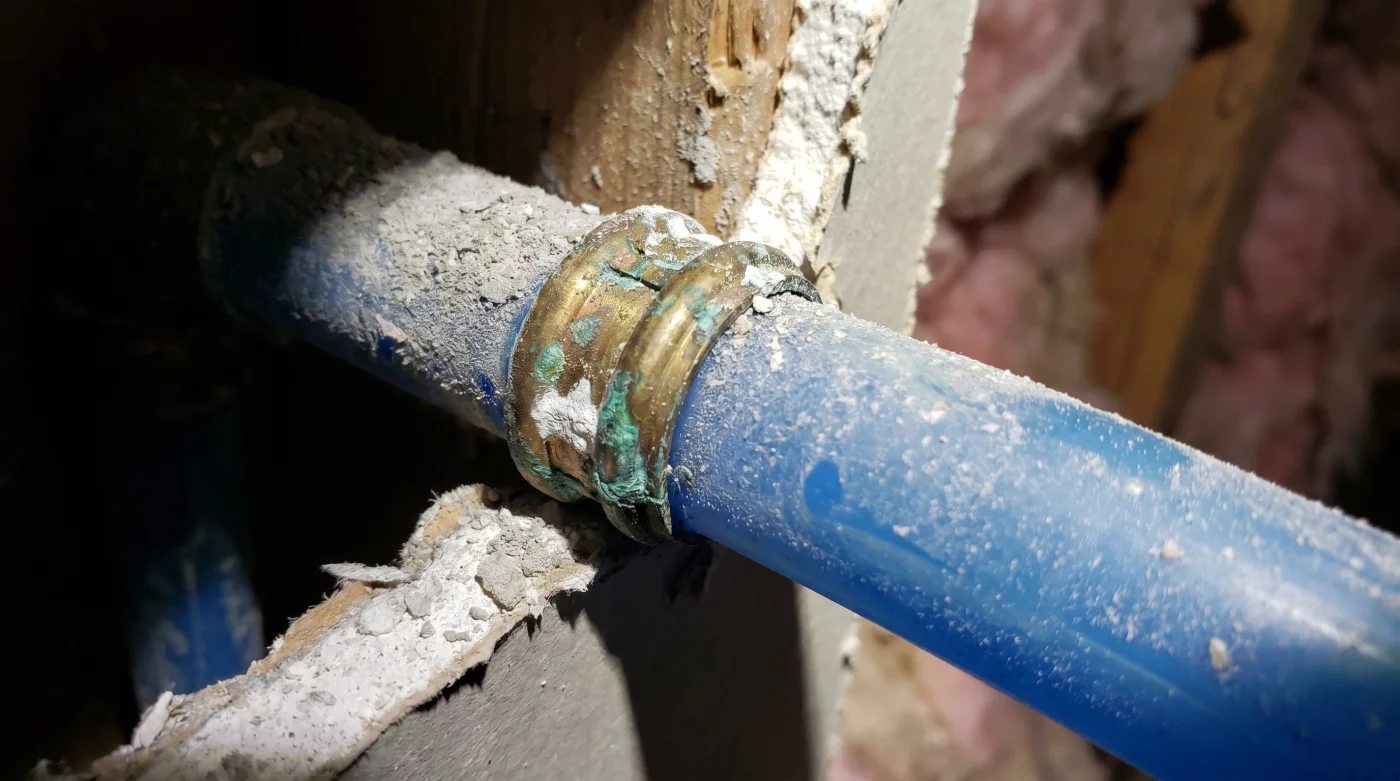
But weeks or years later, long after the vapour barrier is sealed and the paint has dried, a faint water stain blooms on the ceiling below. You cut open the pristine wall, expecting to find a split pipe or a loose connection. Instead, you find a crusty, greenish-black lump where your shiny brass fitting used to be. The culprit is not a failed crimp or a burst line. It is a slow, silent, microscopic war waged between cold metal and chalky dust.
The convenience of routing flexible tubing directly against raw building materials masks a harsh chemical reality behind the walls. The heavy brass fittings binding your water system together are quietly suffocating against the gypsum. What feels like a snug, secure fit is actually the beginning of a chemical reaction that will slowly eat through the structural integrity of your plumbing.
The Anatomy of a Silent Wall
Think of your home’s water lines not as a static highway, but as an active, breathing organism. Drywall, particularly the raw cut edges inside the wall cavity, contains latent moisture and slightly acidic chemical compounds used during manufacturing. When your brass crimp rings lay flush against this chalky surface, it creates an unintended reaction.
It is like resting a wet sponge against a dry battery. A slow chemical transfer begins, pulling the microscopic moisture from the air and reacting with the acidic dust of the gypsum board. It is a localized form of galvanic-style corrosion, accelerated by the slight condensation that naturally forms on cold water lines. The brass weakens, turns brittle, and eventually weeps.
Instead of treating PEX as a heavy-duty garden hose that you can simply stuff into any dark cavity, you must treat it like a suspended nervous system. The physical space around the fitting is just as critical as the watertight seal inside it. The goal is to route the water, not to let the materials lean on the architecture for support.
- Lawnmower blades lose their edge instantly without a micro-bevel grind
- Peel-and-stick backsplash adhesives ruin drywall without this simple barrier tape
- Cedar decking costs plummet when buying off-season mill direct batches
- Pantry shelving wastes vertical space without tiered gravity dispensers
- P-trap pipe leaks stop when you abandon liquid thread sealants
Arthur Penhaligon, a 58-year-old master plumber working in Halifax, pulls ruined copper and brass from century-old homes and brand-new builds alike. He has a phrase for the green, corroded crimp ring failing behind a living room wall: ‘Wood breathes, drywall drinks, and brass bleeds.’ He teaches his apprentices that touching a brass fitting to raw building material is like leaving a car parked in sea water. The damage is entirely predictable, yet entirely preventable with a piece of plastic that costs pennies.
Adapting Your Approach for Every Wall
For the Open-Stud Retrofit
If you are staring at a completely open stud bay before the insulation goes in, you have the luxury of visual space. You are not just threading lines; you are mapping routes. You can plan exactly where the pipe will cross the horizontal blocking, ensuring no brass connector lands near the face of the studs where the drywall will eventually sit.
Having the luxury of structural mapping means you can drill your holes dead centre in the framing. This natural positioning keeps the tubing and the brass rings floating securely in the middle of the wall cavity, far away from the acidic reach of the plasterboard edges.
For the Blind Fish
When you are pulling tubing through a small access hole in a finished wall—a technique often required when adding a new fixture a few Miles out of town where calling a professional means a three-week wait—you cannot see where the pipe rests. You have to feel the tension on the line.
You must trust your tactile feedback to ensure the heavy brass junctions are not resting hard against the back of the drywall. If you feel the pipe dragging heavily against a flat surface, the fitting is scraping the gypsum. You will need to secure the line from your access point to lift the weight of the brass away from the wall board.
The Mechanics of Suspension
To truly conquer this plumbing system, you must suspend your materials. Using structural plastic standoff clips is not a suggested extra step; it is the entire foundation of a leak-free home. These cheap, simple plastic brackets act as an inert buffer, holding the brass in mid-air and physically blocking the acidic dust from making contact with the metal.
The entire foundation of prevention relies on breaking the physical contact between reactive materials. The plastic clip absorbs the tension of the flexible tubing, taking the weight off the fitting itself. It acts as a structural cradle.
- Slide the plastic standoff onto the stud or joist before making your final cut in the tubing.
- Ensure the ambient basement temperature holds above 10 Celsius during crimping to prevent ring distortion or uneven plastic contraction.
- Crimp the brass ring precisely one-eighth of an inch from the tubing edge to ensure the tool jaws do not pinch the plastic.
- Snap the finished joint into the plastic cradle, verifying it floats freely with at least half an inch of clearance from the raw drywall edge.
- Space your plastic clips every 32 inches for horizontal runs to prevent the tubing from sagging over time.
The Quiet Confidence of Done Right
When you finally close up that wall, spreading a smooth layer of joint compound over the seams, you are doing more than just hiding the pipes. You are sealing away a perfectly balanced system. You know exactly what is happening in the dark space behind the paint.
Knowing those brass rings are suspended safely in their plastic cradles, entirely immune to the chalky acidity of the drywall, shifts your relationship with your home. You no longer hold your breath when you turn the main water valve back on. You no longer worry about a silent leak ruining the ceiling below.
You have mastered the environment behind the drywall, controlling the microscopic interactions of the materials you installed. That is true quiet domestic peace.
Physical distance between reactive materials is the cheapest insurance policy a homeowner will ever buy.
| Key Point | Detail | Added Value for the Reader |
|---|---|---|
| Brass on Gypsum | Direct contact allows acidic moisture transfer. | Explains the invisible cause of slow wall leaks. |
| Floating on Plastic | Inert standoff clips break the chemical bridge. | Provides a permanent, low-cost mechanical solution. |
| System Suspension | Securing the tube every 32 inches prevents sagging. | Ensures long-term structural integrity and quiet pipes. |
Frequently Asked Questions
Why does drywall dust react with brass fittings?
Drywall contains gypsum and various manufacturing chemicals that, when exposed to the slight condensation on cold water pipes, create a mildly acidic environment that corrodes brass over time.Can I just wrap the brass fitting in electrical tape?
Tape adhesives can degrade and trap moisture directly against the brass. A rigid plastic standoff clip is the only secure way to maintain an air gap and support the weight of the pipe.Do plastic PEX fittings suffer from the same drywall reaction?
No, plastic fittings are chemically inert to gypsum, but they should still be properly secured with standoff clips to prevent mechanical strain and water hammer noise.How much clearance do I need between the brass and the drywall?
Aim for at least half an inch of clear air space. This prevents any shifting in the house framing from pushing the raw drywall edge into the fitting.Can I install the standoff clips after the pipe is already crimped?
Yes. Most structural plastic clips are designed as half-moon snap-in brackets, allowing you to lift the finished line and snap it into the cradle without disconnecting the water.